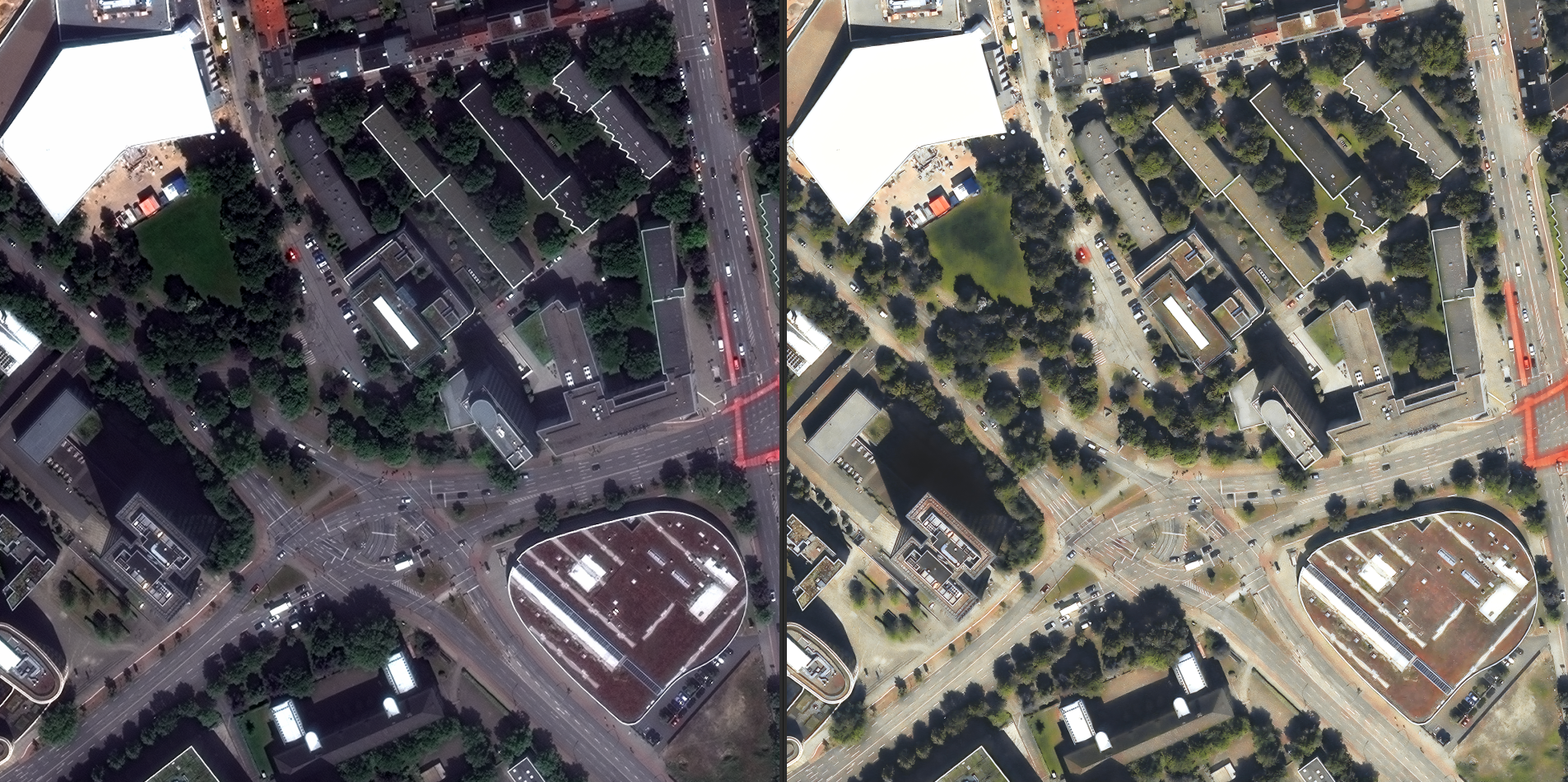
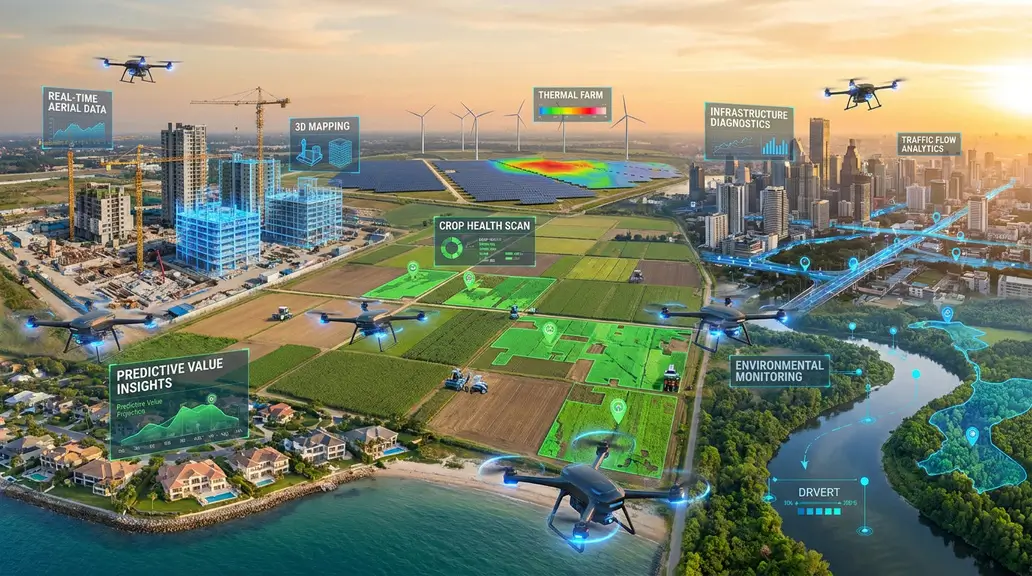
Building footprints are the polygonal outlines of structures, often enriched with metadata about a building's purpose, its relationship to nearby places and its precise address. Simple in form, they are remarkably versatile — and high-precision footprints unlock applications across many sectors.
Why footprints are hard to source
For all their value, accurate, comprehensive, current footprints have historically been hard to obtain. Manual digitisation is thorough but slow and costly at scale — and often outdated by the time it is finished, which severely undercuts its analytical value.
Where footprints deliver
- Insurance & risk — exposure and accumulation analysis tied to the actual structure.
- Urban planning — complete building-stock data for development and policy.
- Telecoms & utilities — premises-level rollout and capacity planning.
- Population & logistics — demographic modelling and last-mile routing.
- Emergency response — knowing exactly what stands where, before crews arrive.
Extracted from imagery by AI, footprints can be both complete and current — the dependable base layer these applications need.