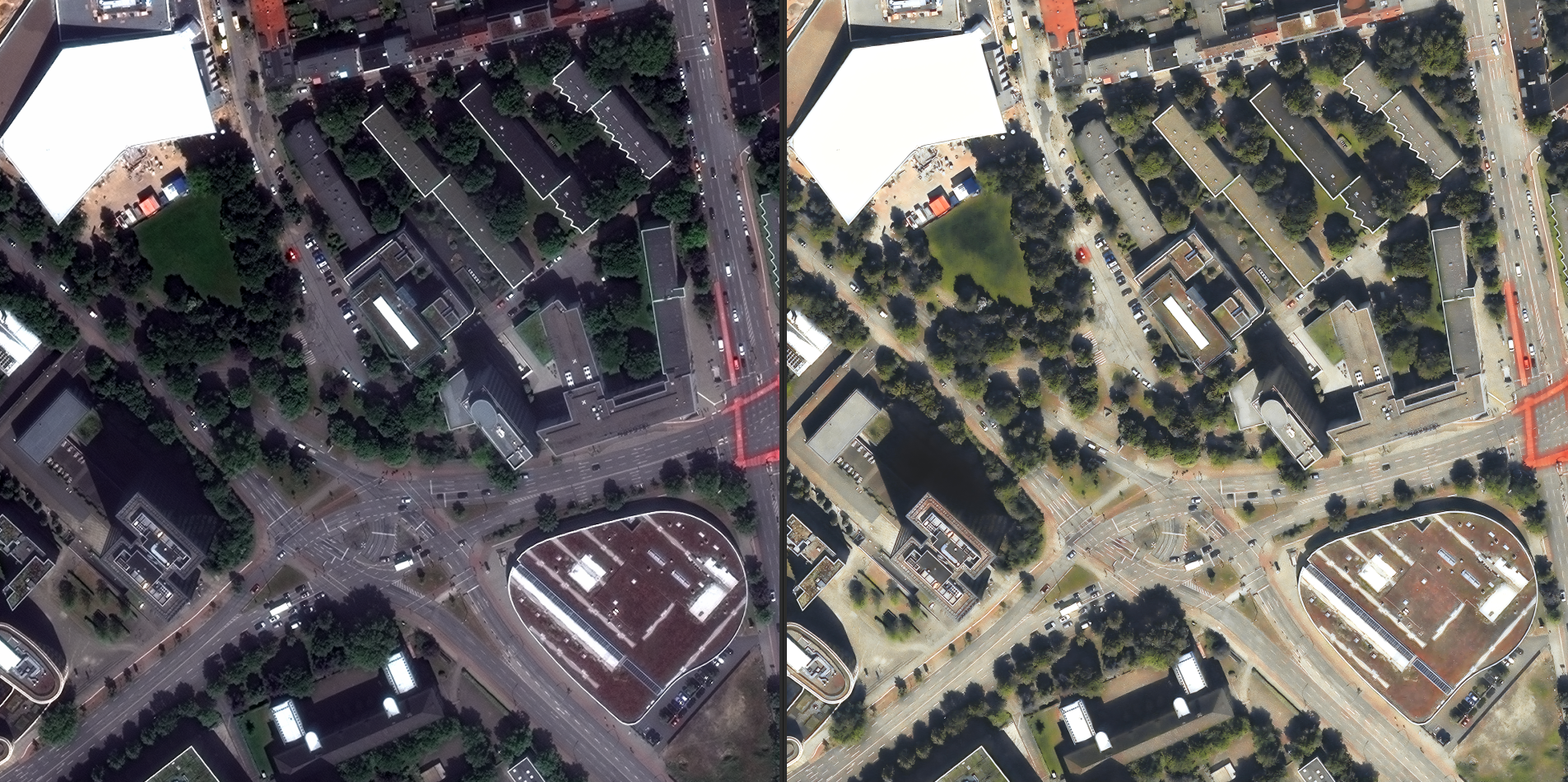
When people insure their property, they rarely realise their insurer insures itself too. Reinsurance lets carriers offload part of their risk so they need not hold the full value of every property in their portfolio — and pricing it well depends on knowing exactly which buildings sit together.
Retention, treaties and accumulation
Property-and-casualty carriers assume a defined level of exposure — their retention — per risk, within set thresholds. Under a treaty, a carrier might cover claims up to a limit while the reinsurer takes the rest. Getting that structure right requires accurate, building-level location data.
Grouping risk by the building
For a regional carrier such as Harford Mutual Insurance Group in Maryland, the most effective approach groups exposures by value subject — the buildings that would be affected together. If one apartment building burns with $3M in damage and an adjacent one sustains $800K, both fall under the same reinsurance treatment because they were underwritten as one subject.
Building-specific geocoding makes that grouping precise: accumulation is modelled against the actual structures on the ground, so reinsurance is priced on measurement, not approximation.