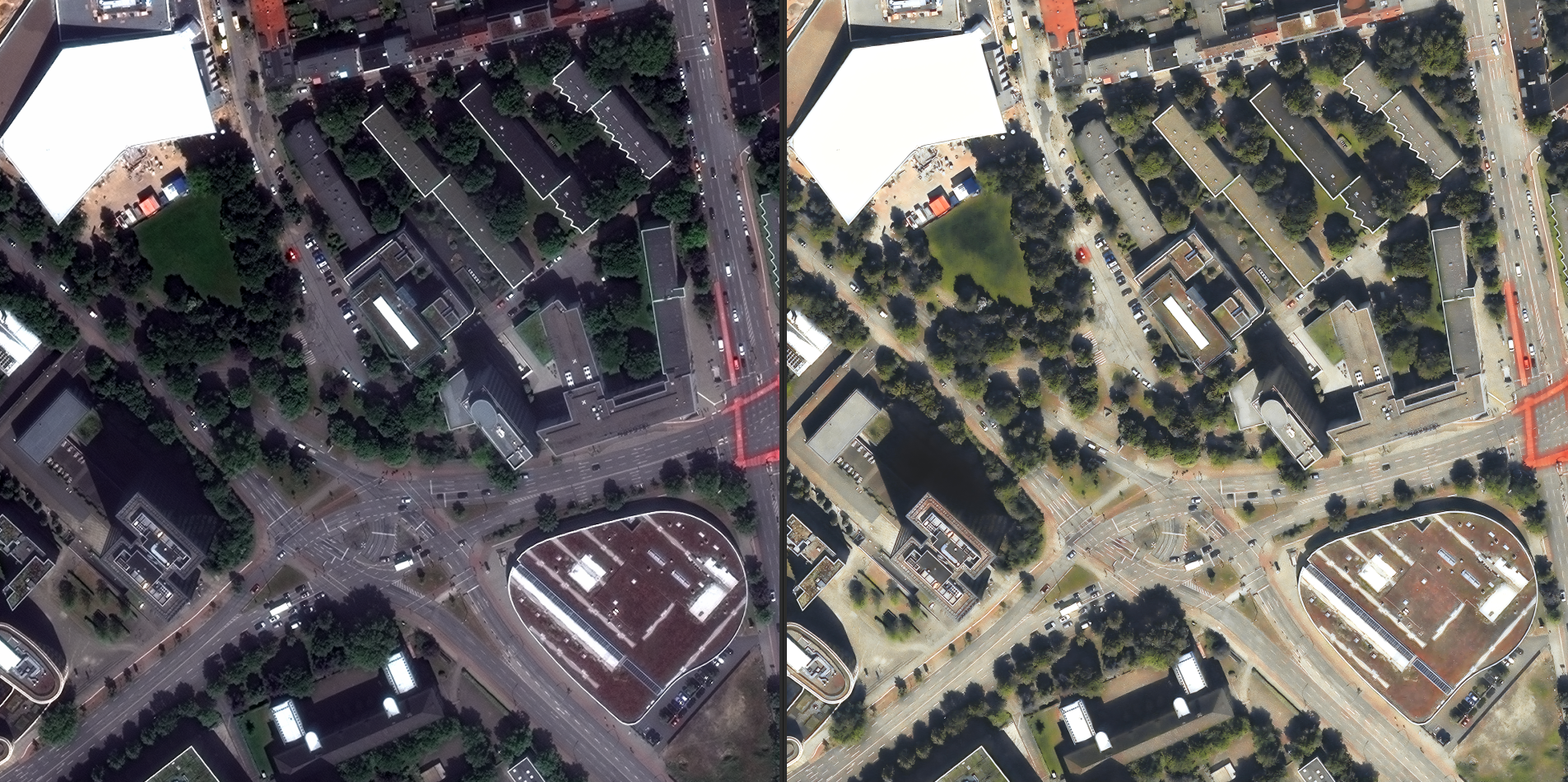
A transport network is only as strong as its weakest links — the unmarked crosswalk, the missing footway, the stop with no safe approach. Metropolitan Planning Organisations (MPOs) are responsible for keeping those networks safe and equitable, and increasingly they turn to AI-powered geospatial data to find the gaps systematically rather than anecdotally.
From anecdote to evidence
Picture a planner working over high-resolution digital maps, pinpointing where pedestrian infrastructure breaks down and where a new bike lane would reconnect a neighbourhood. AI-extracted layers — sidewalks, crossings, kerb ramps, road markings — make that scenario routine rather than aspirational.
A data-driven method
By extracting the full mobility layer from imagery and analysing it in a GIS, an MPO can identify critical deficiencies such as unmarked crosswalks and limited sidewalk access, then design targeted interventions that make streets safer and more equitable. The analysis turns scattered complaints into a prioritised, fundable programme: where accessibility fails, who is underserved, and where investment closes the most gaps for the least cost.